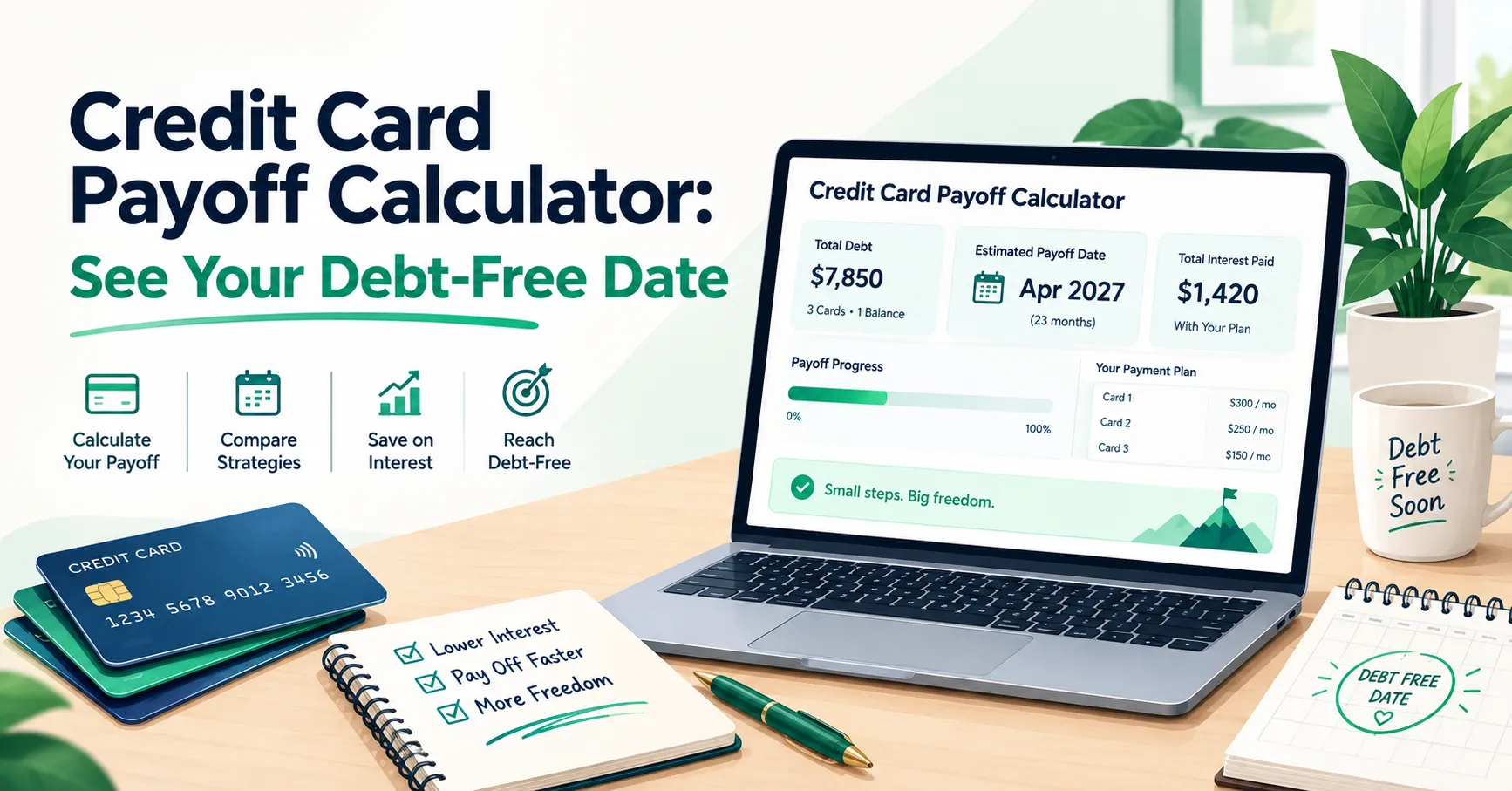
Trying to decide how to attack your debt can feel overwhelming, especially when you’re juggling multiple cards and loans. This calculator shows you how the Debt Snowball and Debt Avalanche methods would play out for your specific numbers, side by side. Whether you’re motivated by quick wins or by saving the most money possible, seeing both paths laid out can help you pick the one you’ll actually stick with.
Debt Payoff Calculator
Compare the Snowball and Avalanche methods to see which gets you debt-free faster and cheaper.
Any amount above minimums that you can put toward debt each month.
A lump sum applied in the month below (bonus, tax refund, etc.).
Month 1 = first payment month.
Remaining Balance Over Time
What Is a Debt Payoff Calculator?
A debt payoff calculator takes your debts, your interest rates, and how much extra you can put toward them each month, then estimates how long it will take to become debt-free.
It works by running the numbers on two common strategies. The Debt Snowball method has you pay off your smallest balance first, then roll that payment into the next smallest, and so on. The Debt Avalanche method has you target the debt with the highest interest rate first, since that’s the one costing you the most over time.
Both methods use the same minimum payments plus the same extra amount you add each month. The difference is only the order you knock out your debts. Comparing them side by side helps you see the trade-off between paying less in interest and staying motivated with faster wins.
How to Use This Calculator
- Enter your first debt. Type in the debt name, current balance, interest rate, and minimum monthly payment.
- Add each additional debt using the “Add another debt” button, entering the same details for every credit card or loan you’re carrying.
- Enter your Extra Monthly Payment. This is any amount above your combined minimums that you can put toward debt each month. This extra amount is what actually accelerates your payoff.
- Optional: add a one-time extra payment. Under the advanced options, you can enter a lump sum (like a bonus or tax refund) and the month it will be applied.
- Click “Compare Payoff Plans.” The calculator will run both strategies using your numbers.
- Review your results. Switch between the Snowball and Avalanche tabs to see your estimated debt-free date, payoff timeline, and total interest paid for each method. You’ll also see how much interest the Avalanche method saves compared to Snowball, plus a chart showing your remaining balance drop over time.
Keep in mind these numbers are estimates based on what you enter. If your balances, rates, or extra payment amount change, come back and update the calculator to see how your plan shifts.
Why This Matters
The strategy you choose can genuinely affect how your debt-free journey feels and, in some cases, how much you pay in interest along the way.
Mathematically, the Avalanche method tends to save more in interest because you’re tackling high-rate debt first. Over time, this usually means less money going toward interest and more going toward your actual balances.
But math isn’t the whole story. The Snowball method is built around momentum. Paying off a small debt completely, even if it’s not your highest-rate one, gives you a real sense of progress. For a lot of people, that early win makes it easier to stay consistent for the months or years it takes to finish.
Neither method is automatically “better” for everyone. Some people need the psychological boost of quick wins to stay on track. Others are fine focusing purely on the numbers. The right choice depends on your personality, your financial situation, and what’s realistically going to keep you consistent.
Tips to Get the Most Out of Your Debt Payoff Plan
Keep your extra monthly payment consistent. Both strategies work best when you commit to the same extra amount each month, even if your income fluctuates a little. Consistency is what drives the results, not the strategy alone.
Avoid taking on new debt while you’re paying off old debt. It’s tempting to use a credit card for an unexpected expense, but new balances can undo progress quickly and stretch out your payoff timeline.
Revisit your plan when your situation changes. A raise, a new bill, or a one-time windfall (like the one-time payment field in this calculator) is a good reason to come back and re-run the numbers. Small adjustments now can save you time and stress later.
Common Mistakes to Avoid
Entering incorrect interest rates or minimum payments. Even small errors here can throw off your results. Double-check your statements before entering numbers, especially for cards with variable APRs.
Reducing your extra payment after a debt is paid off. This is one of the biggest reasons people take longer than expected to become debt-free. The whole point of both Snowball and Avalanche is to roll the payment from a cleared debt into the next one, not to pocket the difference.
Choosing a strategy without thinking about your own habits. Picking Avalanche because it “saves more money” only works if you’ll actually stay consistent with it. If quick wins keep you motivated, Snowball might get you to the finish line in practice just as well, even if it costs a bit more in interest.
Frequently Asked Questions
What is the difference between Debt Snowball and Debt Avalanche?
The Snowball method pays off your smallest balance first, regardless of interest rate. The Avalanche method pays off your highest-interest debt first. Both use the same minimum payments plus the same extra monthly payment; only the order changes.
Which method saves more money?
In most cases, the Avalanche method saves more in interest because it targets high-rate debt first. The calculator shows you the exact interest difference between the two methods based on the balances, rates, and extra payment you enter.
Which method pays off debt faster?
The total payoff time is often similar between the two methods, since the same total payment is used either way. The Snowball method may feel faster because you clear individual balances sooner, even if the overall debt-free date is close to the same.
Can I switch between Snowball and Avalanche?
Yes. Some people start with Snowball for early motivation, then switch to Avalanche once they’ve built momentum. You can re-run the calculator anytime to see how a switch might affect your plan.
Should I use the calculator if I have multiple credit cards and loans?
Yes, this is exactly the situation the calculator is designed for. Enter all of your debts together so you can see how each strategy handles the full picture, not just one account at a time.
You’re Closer Than You Think
Paying off debt is rarely quick or easy, but every payment you make is real progress, even when it doesn’t feel like it. Whichever method you choose, the fact that you’re planning ahead already puts you in a stronger position than where you started.
If you’d like extra support staying on track, download the free SheetsWell Debt Payoff Tracker to log your progress month by month. You can also join the SheetsWell email list for practical, no-fluff budgeting and debt-payoff resources sent straight to your inbox.