The worst part of credit card debt isn’t the number. It’s not knowing when it ends.
I remember paying $200 toward a card one month, feeling okay about it, and then opening the next statement to find the balance had barely moved. Interest had eaten most of it. And I had no idea whether I was two years out or five. That uncertainty is its own kind of weight. You’re doing the work and sending the money, and you still can’t tell if it’s making a difference.
If you’ve ever made a payment and then felt that quiet “wait, did that even help?” moment, this one’s for you.
Because the moment you can see a date, a real month and year when this is over, the whole thing changes. It stops being an endless pit and becomes a project with an end. And a project with an end is something you can plan around.
In this guide, you’ll learn:
- Why your balance barely moves (and why it’s not your fault)
- How to find your debt-free date in about two minutes with our free calculator
- What each extra dollar actually buys you in time and interest
- How to track your progress month by month
- Three common traps that quietly push your finish line back
Why Your Balance Barely Moves
Credit card interest is brutal in a way that’s easy to underestimate.
Here’s a simple example. Say you owe $5,000 on a card with a 24% APR. Divide 24% by 12 and you get 2% interest per month. That means the card charges you about $100 in interest this month alone.
Now imagine you send $150. Of that payment, $100 covers the interest and only $50 reduces what you owe. You paid $150 and your balance dropped by $50.
(These numbers are illustrative. Your card’s APR and how interest is calculated will vary, so check your statement for your exact rate.)
That’s why the balance seems stuck. You’re not failing, you’re fighting the math. And the higher the APR, the harder the math fights back.
This is also why paying only the minimum is the most expensive way to carry a card. Minimums are calculated to keep payments low, which keeps you in debt longer. That’s not malice, it’s just how the formula works. But the effect is the same: you stay in debt far longer than you need to, and you pay a lot for the privilege.
Two things change the picture:
- Knowing exactly where you stand.
- Knowing exactly what each extra dollar buys you.
That’s what a payoff calculator is for.
Find Your Debt-Free Date in Two Minutes
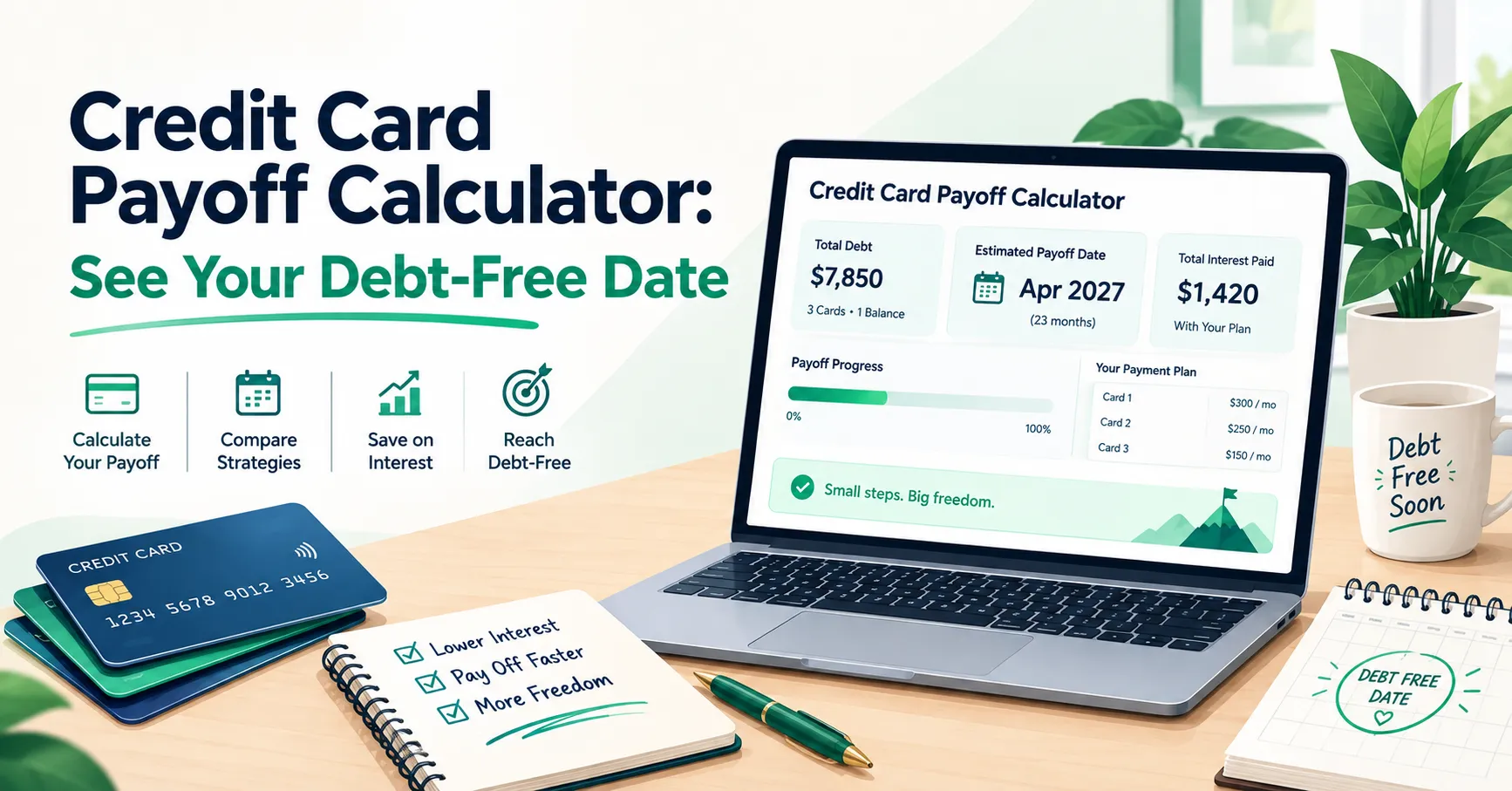
Our free Credit Card Payoff Calculator works right here on the site. There’s no download, no sign-up, and the results are instant.
Here’s what you’ll need on hand (grab a recent statement):
- Your current balance
- Your APR (the interest rate, usually listed on your statement)
- How much you plan to pay each month
Enter those three numbers and the calculator shows you:
- Your debt-free date, the month and year your balance hits zero
- How many months it will take
- How much total interest you’ll pay along the way
A quick tip: be honest about your monthly payment, not optimistic. A realistic number you can keep up for two years beats a heroic number you abandon in month three. If you’re not sure what’s realistic, work out what’s left after your essentials first. Our guide to building a zero-based budget in Google Sheets walks through exactly how to find that number.
If you have several cards, run the calculator once per card to see each one’s timeline. Then use the payoff sheet below to combine them into one plan.
What an Extra $100 Really Buys You
This is the part that surprised me most when I first ran the numbers. Let’s use the same example: $5,000 at 24% APR, with no new charges. Here’s what different fixed monthly payments do:
| Monthly payment | Time to pay off | Total interest paid (approx.) |
|---|---|---|
| $150 | About 56 months (4 years, 8 months) | About $3,300 |
| $250 | About 26 months (just over 2 years) | About $1,450 |
| $400 | About 15 months | About $800 |
Look at the jump from $150 to $250. That extra $100 a month cuts the timeline by more than half and saves roughly $1,850 in interest. It’s the same debt and the same card. The only difference is a bit more money each month.
Meanwhile, the jump from $250 to $400 is smaller in dollars saved, but it gets you out more than a year earlier. At some point you’ll hit a payment that’s right for your budget. The goal isn’t to pay as much as humanly possible. It’s to pick a number you can sustain, and then see exactly where it takes you.
Try this in the calculator right now. Enter your real payment, note the date, then bump it up by $25, $50, and $100. Watching the date move closer is surprisingly motivating, and it often reveals a small change worth making.
If you want to see where that extra money could come from, a few places to look:
- A subscription or two you’ve stopped using
- A temporary trim to one spending category (just for the payoff period)
- Side income or a one-time windfall, like a tax refund or bonus
- Cash you’ve been losing to late fees or interest on other debt
Go Further With the Credit Card Payoff Sheet
The calculator is perfect for a quick answer. But if you’re juggling multiple cards, or you want to track progress month by month, a full spreadsheet gives you more room to work.
That’s what the Credit Card Payoff Sheet is for. You enter your cards and how much you can put toward them each month, and the sheet builds a plan. It’s built around a few connected tabs:
- Credit Cards: where all your cards live, with balance, APR, and minimum payment
- Payoff Plan: a month-by-month schedule showing where each payment goes
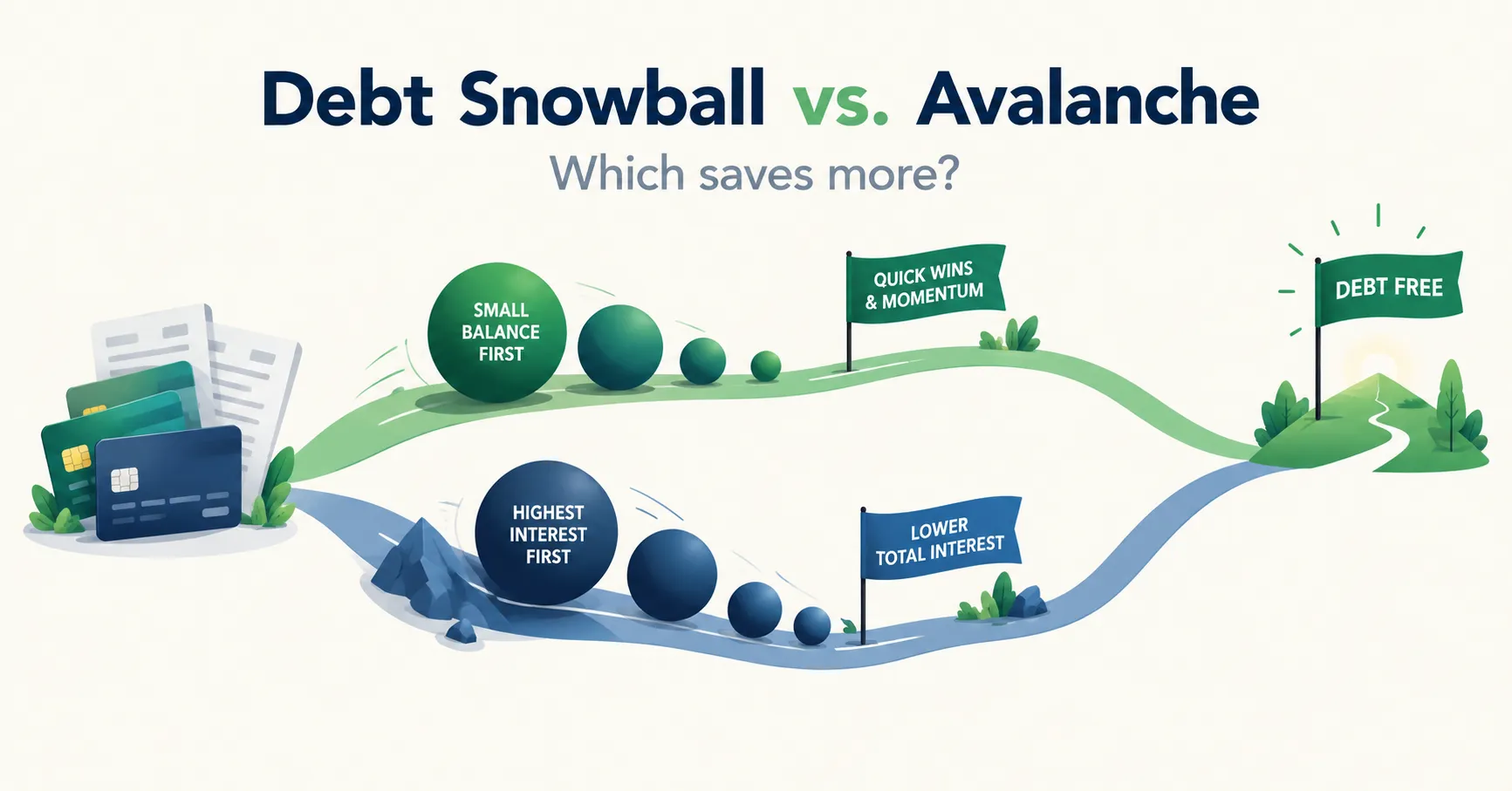
- Snowball vs. Avalanche: a side-by-side comparison using your exact numbers
- Monthly Tracker: a place to log what you actually paid
- Dashboard: your total debt, estimated debt-free date, estimated interest, and a progress bar
My favorite feature is the What-If Calculator on the Dashboard. It shows you side by side what happens at different monthly payment amounts: how many months it takes, how much interest you pay, and what your debt-free date becomes at each level. Seeing it laid out is far more convincing than being told to “pay more than the minimum.”
How to Use the Credit Card Payoff Sheet, Step by Step
1. Make your own copy first. Open the template, go to File, then “Make a copy.” The example data is just there to show you the layout, so replace it with your own.
2. Add your cards on the Credit Cards sheet. For each card, enter the name, current balance, APR, and minimum payment. Credit limit and due date are optional, but adding the limit is worth it. The sheet uses it to calculate your credit utilization, which matters for your credit score.
3. Enter your monthly debt budget. This is the total you can put toward credit card debt each month, all cards combined. The sheet immediately shows how much of that sits above your combined minimums. That “Extra Available” number is your real firepower.
4. Pick your payoff method. On the Payoff Plan tab you can choose Debt Snowball (smallest balance first), Debt Avalanche (highest APR first), or Custom Order, where you set your own priority for each card.
5. Compare both methods before you commit. The Snowball vs. Avalanche tab runs both with your numbers and shows months to payoff, total interest, and debt-free date side by side. Sometimes the gap is significant. Sometimes it’s small enough that you should just pick whichever keeps you motivated.
6. Review your month-by-month plan. The Payoff Plan tab shows how payments are split across your cards each month and how each balance shrinks. This is where “someday” turns into a specific schedule.
7. Log what you actually paid. Each month on the Monthly Tracker, enter the card, starting balance, planned payment, actual payment, and any interest or fees. The sheet calculates your ending balance and how much debt you actually knocked out.
8. Check the Dashboard. Total debt, estimated debt-free date, estimated interest, and your progress bar all live here. Open this tab whenever you need a reminder that it’s working.
Three Traps That Push Your Finish Line Back
Even with a great plan, a few things quietly sabotage progress. Watch for these.
Trap 1: The shrinking minimum payment
Most cards calculate the minimum as a percentage of your balance, often plus interest or fees. So as your balance drops, the required minimum drops too. If you follow it, your payoff stretches out for years.
The fix is simple: pick a fixed payment and keep it the same every month, no matter what the statement says the minimum is. As the minimum shrinks, the difference goes straight to your balance. This is one of the biggest reasons people stay in credit card debt longer than they need to.
Trap 2: Only watching the balance, not the utilization
Credit utilization is your balance as a percentage of your credit limit. For example, a $3,000 balance on a $4,000 limit is 75% utilization.
A common rule of thumb is to keep utilization under about 30%, and very high utilization (say, above 90%) can weigh heavily on your credit score. The Credit Cards tab shows utilization for each card and overall.
Because of this, paying down a nearly maxed-out card first can sometimes help your score more than paying down a larger card with plenty of room left, even if the pure interest math points the other way. If your credit score matters for something coming up, like a car loan or a mortgage, keep an eye on this. It can also help to check your debt-to-income ratio, since lenders look at that alongside your credit score.
Trap 3: Still using the card you’re paying off
This sounds obvious. In practice, it isn’t. Every payoff projection, in the calculator and in the sheet, assumes you’re not adding new charges.
If you’re paying $500 a month and charging $200 back to the card, your real progress is $300, and your debt-free date is much further out than any tool will show. If you can, set the card aside, switch to a debit card or cash for everyday spending, and let the payoff plan do its job.
A surprise expense is often what sends people back to the card. A small emergency fund acts as a buffer, even a modest one, so the dentist bill or car repair doesn’t land on the credit card. Our emergency fund tracker makes that starter cushion feel doable alongside your payoff.
Which Card Should You Pay First?
If you have more than one card, the order matters. The two classic strategies are:
- Snowball: pay the smallest balance first for quick wins
- Avalanche: pay the highest interest rate first to save the most money
Both work, and which is better depends on your numbers and your personality. We break down the trade-offs in Debt Snowball vs Avalanche: Which Method Saves You More?. You can also run your own numbers in the Debt Payoff Calculator, which compares both methods side by side.
Whichever you choose, the most important thing is that you keep going.
Don’t Let Payment Dates Sneak Up on You
One more small thing that makes a big difference: a late payment can mean a fee, a higher interest rate, and a hit to your credit. When you’re stretching your budget to pay extra, it’s easy to lose track of due dates across several cards.
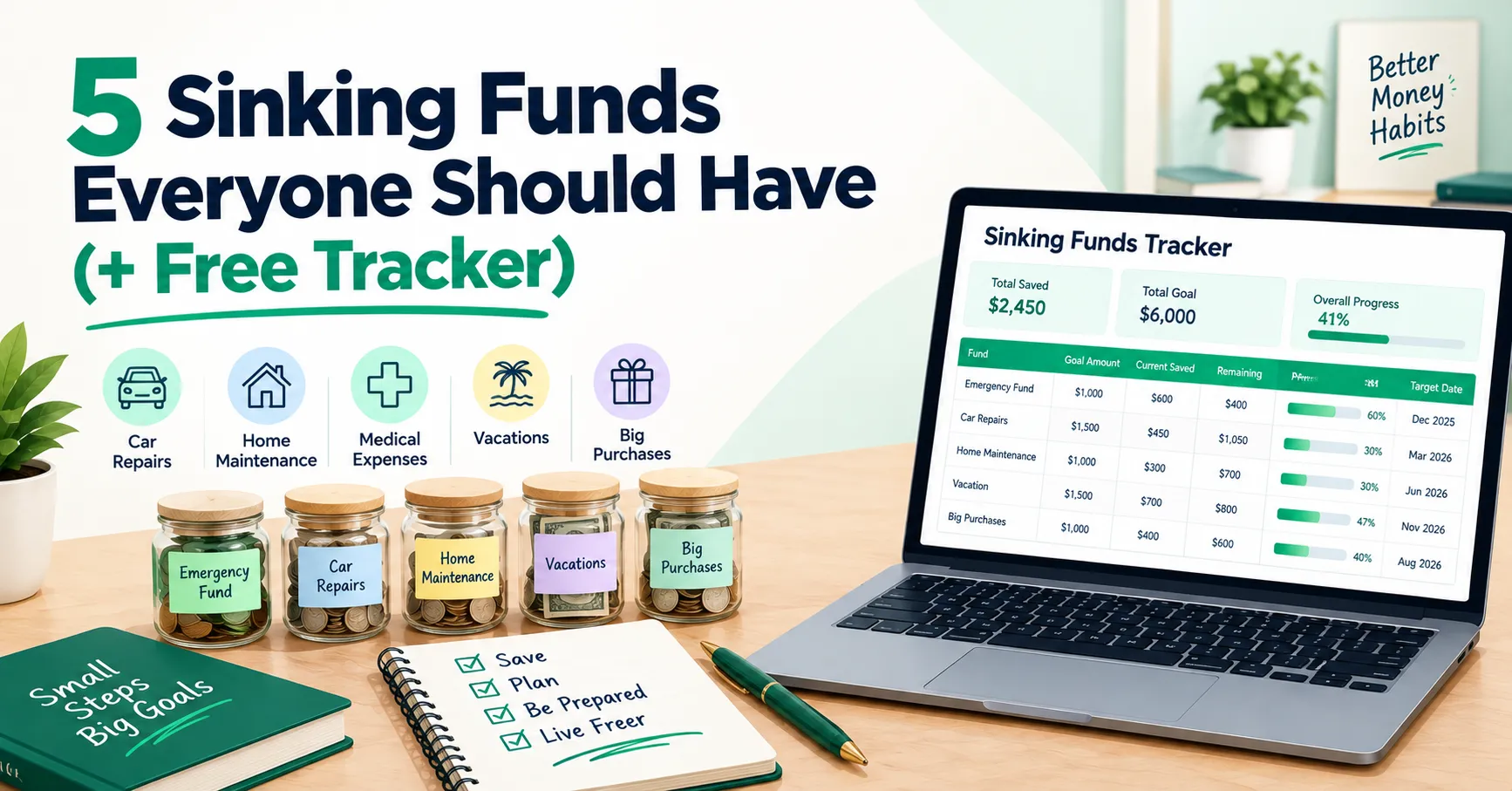
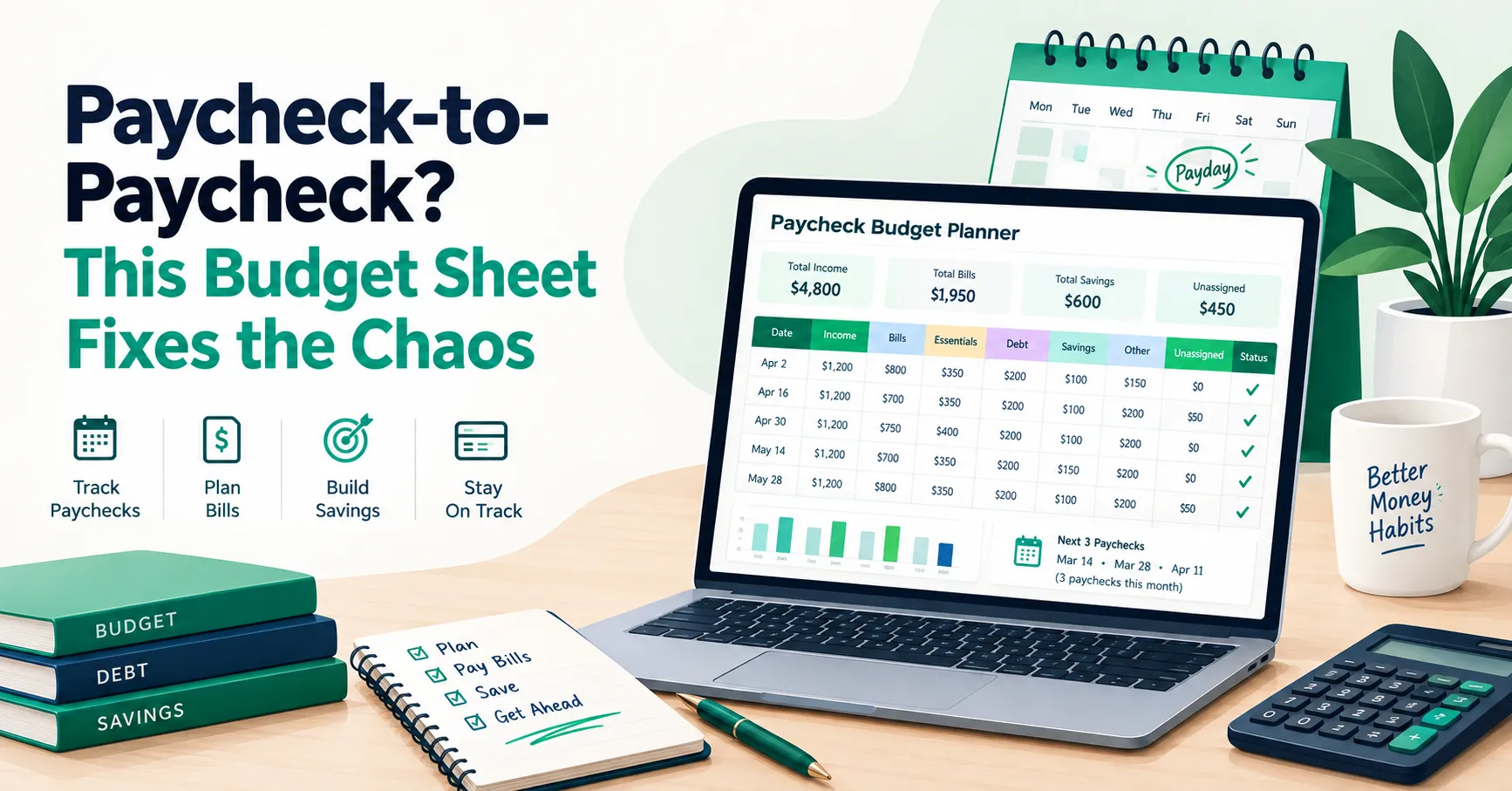
Our Bill Due-Date Tracker keeps every due date in one place. And if your income feels tight month to month, this paycheck-to-paycheck budget sheet can help you find the room to make your payoff payment without the chaos.
You Can See the End From Here
Debt feels permanent right up until the moment it has a deadline. Then it’s just a number getting smaller on a schedule you control.
You don’t need to have everything figured out today. Start with the simplest step:
- Open the free Credit Card Payoff Calculator and enter one card. In two minutes, you’ll have a real date.
- Try a few higher payments and watch how much sooner that date arrives.
- Grab the Credit Card Payoff Sheet to build a full plan, track every payment, and keep your debt-free date in view.
While you’re here, explore the full SheetsWell template library for budgeting, savings, and debt tools that work alongside this one. And if you want more structure, such as multi-year planning, deeper tracking, and more detailed dashboards, check out our premium templates.
Want tools like this landing in your inbox as we build them? Join the SheetsWell email list. No hype, no noise, just what’s genuinely helped me and a lot of other people get out from under this.
Clear your debt. Master your cash. One payment at a time.