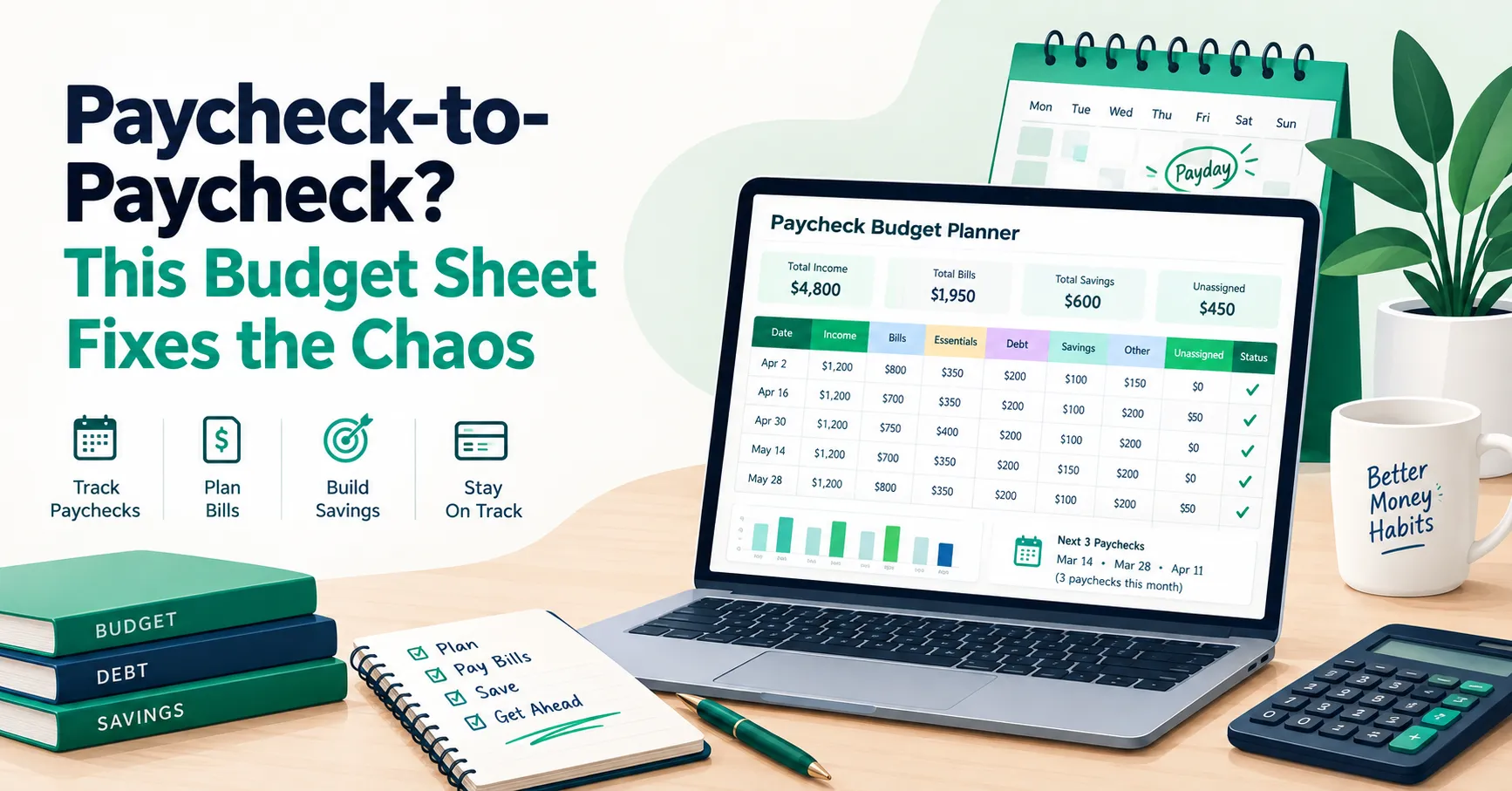
Figuring out how to split your paycheck between needs, wants, and savings shouldn’t require a finance degree. This calculator uses the popular 50/30/20 rule to give you a starting framework, and lets you compare your actual spending against it, or adjust the percentages to fit your own life.
Budget Calculator
Split your take-home pay using the 50/30/20 rule: Needs, Wants, and Savings/Debt Repayment.
Your income after taxes.
Optional — enter what you actually spend to compare against the recommended split:
Recommended Budget Split
What Is a Budget Calculator?
A budget calculator takes your take-home income and splits it into recommended spending categories, so you have a clear framework instead of guessing where your money should go.
This calculator uses the well-known 50/30/20 rule as its default: roughly 50% of your income toward needs, 30% toward wants, and 20% toward savings or debt repayment. From there, it’s fully customizable. You can adjust each percentage to match your actual priorities, and compare what you’re currently spending in each category against the recommended split.
The goal isn’t to force you into a rigid formula, but to give you a benchmark you can measure your own budget against.
How to Use This Calculator
- Enter your monthly take-home income. Use your income after taxes and deductions, since that’s what you actually have available to spend.
- Optional: adjust the percentage split. Under advanced options, the calculator defaults to 50% needs, 30% wants, and 20% savings/debt. Change these numbers if you want a different split, like 60/20/20 or any combination that adds up in a way that fits your situation.
- Optional: enter your actual spending. If you want to compare your real numbers against the recommended amounts, enter what you actually spend on needs, wants, and savings.
- Click “Calculate Budget.”
- Review your results. You’ll see the recommended dollar amount for each category based on your income and percentages, a chart showing the split visually, and a table comparing your actual spending to the recommendation if you entered it.
These figures are a planning guide based on the numbers and percentages you choose, not a strict rule. Adjust them as needed to reflect your real priorities and obligations.
Why This Matters
A budget framework like 50/30/20 gives you a simple starting point when you don’t already have a system in place. Instead of tracking every category from scratch, you get a rough target to measure against and adjust from there.
That said, the standard percentages don’t fit everyone. Someone with high rent in an expensive city might need to allocate closer to 60–65% toward needs. Someone aggressively paying off debt might want to push savings and debt repayment well above 20%. The ability to customize the split here is meant to reflect that reality, not force you into a one-size-fits-all number.
Comparing your actual spending to your target split can also be genuinely eye-opening. It’s common to think you’re spending less on wants than you actually are until you see the real numbers side by side.
Tips to Get the Most Out of Your Budget Plan
Start with the default split, then adjust based on your real numbers. Run your actual spending against the 50/30/20 defaults first, then tweak the percentages to something realistic for your situation rather than an ideal you can’t currently hit.
Revisit your budget after income or expense changes. A raise, a new bill, or a move to a new place is a good reason to re-run the numbers and update your target split.
Use the comparison table honestly. The value of this calculator comes from entering your actual spending accurately, not the numbers you wish were true. An honest comparison is what makes the results useful.
Common Mistakes to Avoid
Confusing needs and wants. Streaming subscriptions, dining out, and similar discretionary costs belong in “wants,” even if they feel routine. Miscategorizing these can make your budget look healthier than it actually is.
Using gross income instead of take-home pay. This calculator is built around after-tax income, since that reflects what you actually have to work with each month.
Setting percentages that don’t add up to 100%, or that don’t reflect your fixed costs. If your needs percentage is set unrealistically low compared to your actual fixed expenses (like rent), the recommended amounts won’t be achievable, which can make the whole exercise feel discouraging rather than useful.
Frequently Asked Questions
What is the 50/30/20 budget rule?
It’s a general budgeting guideline suggesting that about 50% of take-home income go toward needs, 30% toward wants, and 20% toward savings or debt repayment. It’s a starting framework, not a strict requirement.
Can I change the percentages?
Yes. This calculator lets you adjust the needs, wants, and savings/debt percentages under advanced options, so you can build a split that actually matches your income and priorities.
What counts as a “need” versus a “want”?
Needs are typically non-negotiable costs like housing, utilities, groceries, insurance, and minimum debt payments. Wants are discretionary spending like entertainment, dining out, and subscriptions. The line can be personal, so use your own judgment where it’s unclear.
Should debt repayment go in the savings category?
In the standard 50/30/20 rule, savings and debt repayment are grouped together in the 20% category. If you’re focused heavily on paying off debt, you may want to increase that percentage temporarily.
How often should I update my budget?
It’s worth revisiting whenever your income or major expenses change, or at least every few months, to make sure your percentages and actual spending are still aligned with reality.
A Framework, Not a Straitjacket
A budget is meant to give you clarity, not to make you feel boxed in. Use this calculator as a flexible starting point, and adjust it as your income, expenses, and goals evolve.
If part of your 20% is going toward debt repayment, download the free SheetsWell Debt Payoff Tracker to keep that progress visible, and join the SheetsWell email list for more practical budgeting resources.