My car battery died on a Tuesday morning, right in my own driveway, ten minutes before I needed to leave for work. Two hundred and forty dollars later, I remember doing that specific kind of math in my head — rent’s due Friday, and now this — and feeling my stomach drop a little. Not a full-blown crisis. Just one of those small emergencies that shouldn’t derail your whole month, but somehow always finds a way to.
If you’ve ever had a “small” expense like that turn into three weeks of financial stress, this one’s for you.
That car battery is the whole reason emergency funds exist. Not for the six-month “what if I lose my job” scenario everyone talks about, though that matters too. For the boring, everyday stuff — a busted appliance, a dentist bill, a flat tire — that either gets covered calmly by money you already set aside, or gets shoved onto a credit card where it quietly grows into a bigger problem.
Why This Actually Matters
Here’s the part people don’t say out loud enough: an emergency fund isn’t really about the money. It’s about not having to make a bad decision under pressure. When your car breaks down and you’ve got zero cushion, you don’t get to think clearly. You just reach for whatever’s fastest — usually a credit card, usually at a rate you’d never agree to if you weren’t stressed.
Without a fund, every unexpected expense becomes debt. And debt from emergencies is some of the hardest to pay off, because it wasn’t planned for, wasn’t budgeted for, and shows up right on top of everything else you’re already juggling.
The tricky part with emergency funds specifically is motivation. Saving for a vacation is fun — you can picture the beach. Saving for “something bad that hasn’t happened yet” is a lot harder to stay excited about. That’s exactly the gap the Emergency Fund Tracker is built to close.
Meet the Emergency Fund Tracker
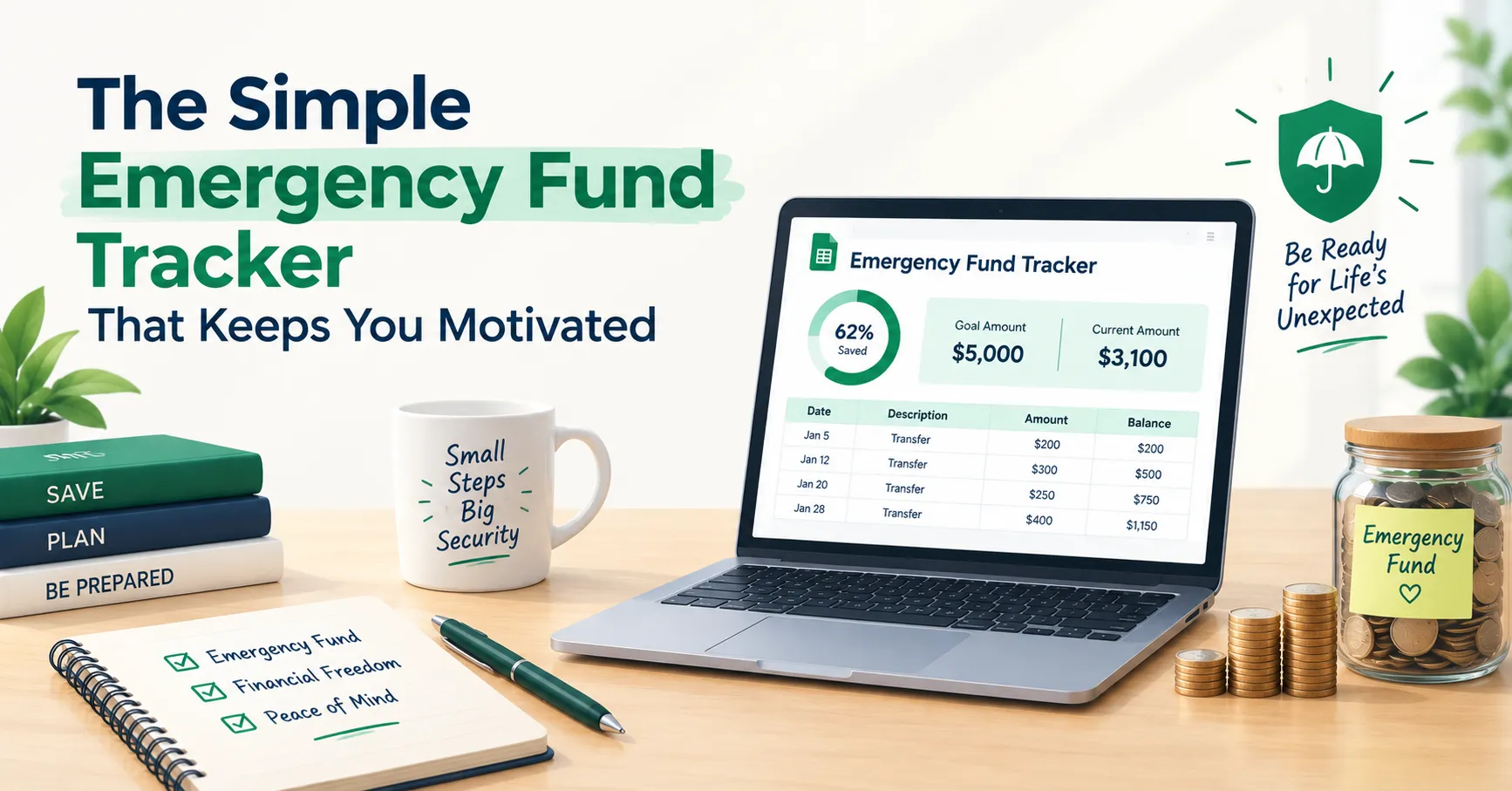
This isn’t just a single number in a spreadsheet cell. It’s a small workbook with three connected pieces — an Emergency Fund sheet, a Monthly Tracker, and a Dashboard — and they all update off each other automatically.
Here’s what makes it actually work, and not just sit there as another sheet you forget about: it turns “save $12,000 someday” into “you’ve covered 2.3 months of expenses, here’s your target date, here’s how close you are today.” That specificity is what keeps people going. A vague goal is easy to abandon. A goal with a number and a date on it is a lot harder to quietly forget about.
How to Use the Emergency Fund Tracker
- Make your own copy first. Open the template, go to File, then “Make a copy,” so you’re working in your own version and not the master file.
- Enter your Essential Monthly Expenses. This lives right at the top of the Emergency Fund sheet. Be specific about what “essential” means here — housing, utilities, groceries, transportation, insurance, and minimum debt payments. Leave out the discretionary stuff like dining out or entertainment. This isn’t your whole budget, just what you’d absolutely need to keep paying if things got tight.
- Pick your Goal Type. The sheet gives you preset options of 3, 6, 9, or 12 months of coverage, which are common starting points, or you can choose Custom and set your own dollar figure. Three months is a reasonable starting target if you’re new to this — six months is the more commonly recommended cushion once you’re further along.
- Enter your Current Emergency Fund Balance. Only count money you’d actually consider fair game for a true emergency, not your vacation fund or your “new laptop” savings. The sheet even calls this distinction out directly, and it matters more than people think — mixing the two makes you feel more protected than you actually are.
- Add your Monthly Contribution. This is how much you plan to put toward the fund each month. The tracker uses this number to estimate your target date, so this is worth being honest about rather than aspirational.
- Check your Key Results and Target Date. The sheet automatically calculates your total goal, how much you have left to save, your current “months covered,” and an estimated date you’ll hit your target based on your current contribution rate. If that date feels too far away, that’s useful information — it means it’s time to look at your contribution amount, not ignore the number.
- Log your real activity on the Monthly Tracker. Each month, enter your actual Contributions and any Withdrawals if you had to dip into the fund. Starting balances, ending balances, and your progress percentage all update automatically — you never need to touch the calculated cells.
- Check the Dashboard when you want the quick version. It pulls everything into one glance — current balance, goal, amount remaining, months covered, and a chart of your balance building over time, plus a plain-language summary of exactly where you stand.
A Few Things Worth Knowing
Don’t let “emergency fund” quietly become “general savings.” It’s tempting to lump every dollar you’re not actively spending into one big pile. But the whole point of this fund is that it’s untouched by anything except a genuine emergency — job loss, a medical bill, an urgent repair. The moment it starts covering vacations or holiday gifts too, you lose track of your actual safety net, and you won’t know your real number when you need it most.
A withdrawal isn’t a failure, it’s the fund doing its job. If you dip into it for a real emergency, log it in the Monthly Tracker like any other month, and then get back to contributing. The tracker is built to handle withdrawals as a normal part of the process, not an exception you have to work around.
You don’t have to choose between paying off debt and building this fund. I get asked this a lot, and there’s no single right answer — it depends on your interest rates and your cash flow. What I will say is that even a small fund, a few hundred dollars, is often enough to stop small emergencies from becoming new debt in the first place. That alone can be worth doing alongside your debt payments, not instead of them.
You’re Closer Than You Think
An emergency fund isn’t glamorous. Nobody posts about their “months of expenses covered” on social media. But it’s quietly one of the most stabilizing things you can build, because it changes what a bad day actually costs you.
Download the free Emergency Fund Tracker, plug in your numbers, and see your real target date for the first time. And if you’d like more tools like this landing in your inbox, join the SheetsWell email list — no hype, no noise, just what’s genuinely helped me and a lot of other people build a real cushion.
Clear your debt. Master your cash. One contribution at a time.