The worst part of credit card debt isn’t the number. It’s not knowing when it ends.
I remember paying $200 toward a card one month, feeling okay about it, and then opening the next statement to find the balance had barely moved. Interest had eaten most of it. And I had absolutely no idea whether I was two years out or five. That uncertainty is its own kind of weight — you’re doing the work, sending the money, and you still can’t tell if it’s making a difference.
If you’ve ever made a payment and then felt that quiet “wait, did that even help?” moment, this one’s for you.
Because here’s the thing: the moment you can actually see a date — a real month and year when this is over — the whole thing changes. It stops being an endless pit and becomes a project with an end. And a project with an end is something you can actually plan around.
Why This Actually Matters
Credit card interest is brutal in a way that’s easy to underestimate. At 25% APR, a big chunk of every payment you make goes to interest before it touches what you actually owe. That’s why the balance barely moves — you’re not failing, you’re just fighting the math.
And that’s the real cost of not having a plan. Without one, you default to paying minimums, which is the single most expensive way to carry a card. Minimums are designed to keep you paying for years. Not out of malice — that’s just how they’re calculated. But the effect is the same: you stay in debt far longer than you need to, and you pay a fortune for the privilege.
Two things change that. Knowing exactly where you stand, and knowing exactly what each extra dollar buys you in time. That’s what this sheet is for.
Meet the Credit Card Payoff Sheet
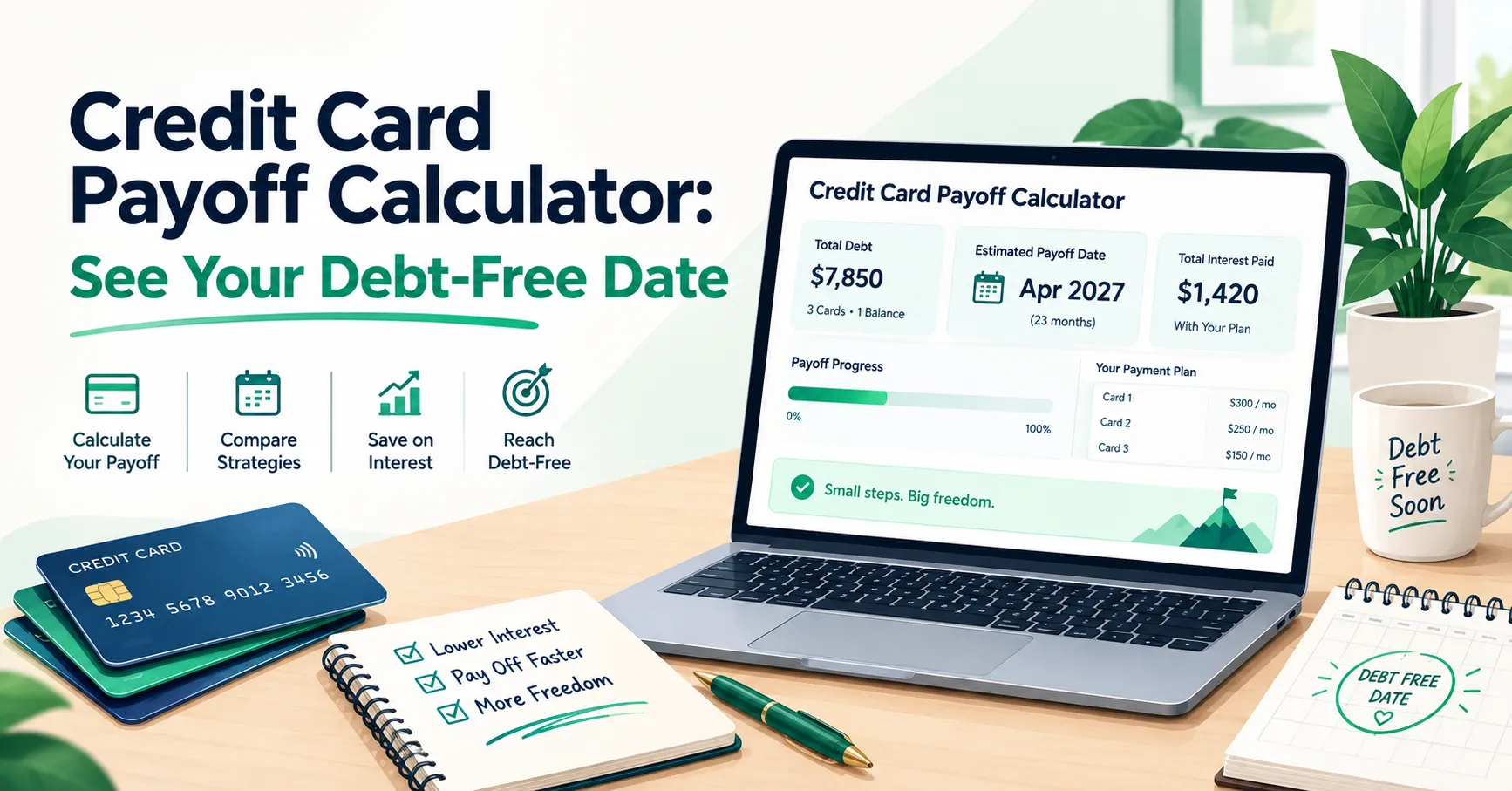
You enter your cards. You enter how much you can realistically put toward them each month. The sheet does the rest — and what it gives you back is a specific month and year you’ll be debt-free.
It’s built around a few connected tabs: a Credit Cards sheet where your cards live, a Payoff Plan that maps out your payments month by month, a Snowball vs. Avalanche comparison, a Monthly Tracker for what you actually paid, and a Dashboard that pulls it all together.
The part I find most useful is the What-If Calculator on the Dashboard. It shows you side by side what happens at different monthly payment amounts — how many months it takes, how much interest you pay, and what your debt-free date becomes at each level. Seeing that an extra $250 a month could cut your timeline nearly in half hits differently than just being told “pay more than the minimum.”
How to Use the Credit Card Payoff Sheet
- Make your own copy first. Open the template, go to File, then “Make a copy.” The example data in there is just to show you the layout — replace it with your own.
- Add your cards on the Credit Cards sheet. For each one, enter the name, current balance, APR, and minimum payment. Credit limit and due date are optional, but adding the limit is worth it — the sheet uses it to calculate your credit utilization, which matters for your credit score.
- Enter your monthly debt budget. This is the total amount you can put toward credit card debt each month, all cards combined. Be honest here rather than optimistic. The sheet immediately shows you how much of that is above your combined minimums — that “Extra Available” number is your actual firepower.
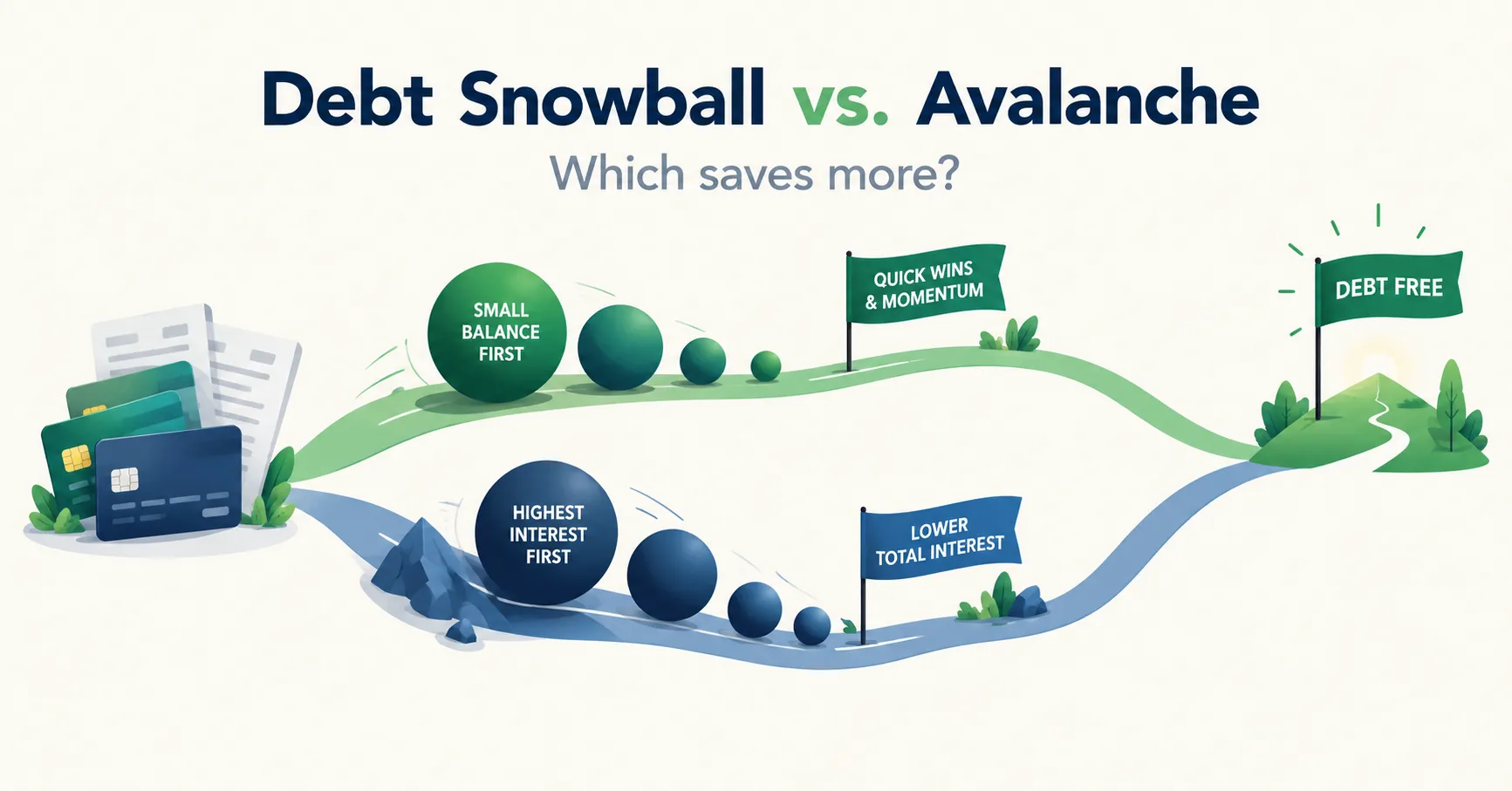
- Pick your payoff method on the Payoff Plan tab. You get three options: Debt Snowball (smallest balance first), Debt Avalanche (highest APR first), or Custom Order, where you set your own priority number for each card.
- Compare both methods before you commit. The Snowball vs. Avalanche tab runs both using your exact numbers and shows the months to payoff, total interest, and debt-free date side by side, plus the actual dollar difference between them. Sometimes the gap is significant. Sometimes it’s small enough that you should just pick whichever keeps you motivated.
- Review your month-by-month plan. The Payoff Plan tab lays out how payments get allocated across your cards each month and shows each balance declining. This is where “someday” turns into a specific schedule.
- Log what you actually paid on the Monthly Tracker. Each month, enter the card, starting balance, planned payment, actual payment, and any interest or fees. The sheet calculates your ending balance and how much you actually reduced your debt.
- Check the Dashboard. Total debt, estimated debt-free date, estimated interest, your progress bar, and that What-If Calculator all live here. This is the tab to open when you need a reminder that it’s working.
A Few Things Worth Knowing
Your minimum payment shrinks as your balance drops — and that’s a trap. Most cards calculate the minimum as a percentage of your balance. So as you pay it down, the required minimum goes down too. If you follow it, your payoff timeline stretches out for years. Keep paying the same fixed amount every month regardless of what the statement says the minimum is. This is the single biggest reason people stay in credit card debt longer than they need to.
Watch your utilization, not just your balance. The Credit Cards sheet shows utilization per card and overall — that’s your balance as a percentage of your credit limit. Above roughly 30% starts weighing on your credit score, and above 90% weighs on it heavily. Sometimes paying down a nearly-maxed card first helps your score more than paying down a larger one with room on it, even if the math says otherwise.
Stop adding to the card you’re paying off. Sounds obvious. It isn’t, in practice. Every payoff projection in this sheet assumes you’re not putting new charges on these cards. If you’re paying $500 a month and charging $200 back, your real progress is $300, and your debt-free date is much further out than what the Dashboard shows.
You Can See the End From Here
Debt feels permanent right up until the moment it has a deadline. Then it’s just a number getting smaller on a schedule you control.
Download the free Credit Card Payoff Sheet → — plug in your cards and see your actual debt-free date in about ten minutes.
While you’re here, explore the full SheetsWell template library for budgeting, savings, and debt tools that work alongside this one. And if you want more structure — multi-year planning, deeper tracking, and more detailed dashboards — check out our premium templates.
Want tools like this landing in your inbox as we build them? Join the SheetsWell email list. No hype, no noise, just what’s genuinely helped me and a lot of other people get out from under this.
Clear your debt. Master your cash. One payment at a time.