There was a month, a couple years into freelancing, where I made almost four times my usual income. And the very next month, I made almost nothing. Same skills, same effort, same client list — just how the timing worked out. I remember sitting there in the “nothing” month, looking at a budget template I’d downloaded that assumed the exact same paycheck every single month, and thinking: this thing was clearly built for someone who doesn’t live like I do.
If you’ve ever opened a budget template, filled in “Monthly Income” at the top, and then just stared at that field because your income refuses to be one number, this one’s for you.
Here’s the thing nobody tells freelancers early enough: the budgeting advice isn’t wrong. The math still works. It’s just built around a paycheck that shows up like clockwork, and yours doesn’t. Once you fix that one assumption, almost any budget sheet — including the free ones on this site — can actually work for you.
Why This Actually Matters
A regular paycheck does something you don’t appreciate until it’s gone: it removes a variable. You know it’s coming, you know the amount, and you can build a plan around it. Freelance and irregular income removes that certainty completely, and it replaces it with a question you end up asking constantly — can I actually afford this right now?
Without a system, that question gets answered by whatever’s in your bank account that day, which is a terrible way to make decisions. A big invoice landing in your account isn’t the same as having “extra” money. Some of it belongs to future you, in a slow month you can’t predict yet. Spend it like it’s all yours today, and you’re setting up the version of you three months from now to come up short.
This isn’t really a discipline problem. It’s a structure problem. Fix the structure, and the discipline gets a lot easier.
The Fix: Pay Yourself a Salary
The core idea that changes everything is simple, even if it takes a minute to sink in: separate how much you earn from how much you spend. Instead of your spending going up and down with every invoice, you pay yourself a steady “salary” out of a buffer you build, and that salary is what your budget sheet actually runs on.
Here’s how it works in practice. All your freelance income goes into one account first — think of it as your business or holding account, not your spending account. From there, you transfer yourself a fixed, modest amount every month, based on your lowest realistic earning month, not your best one. That fixed number is what goes into any budget sheet’s income field. The rest stays in the holding account as a buffer for the lean months.
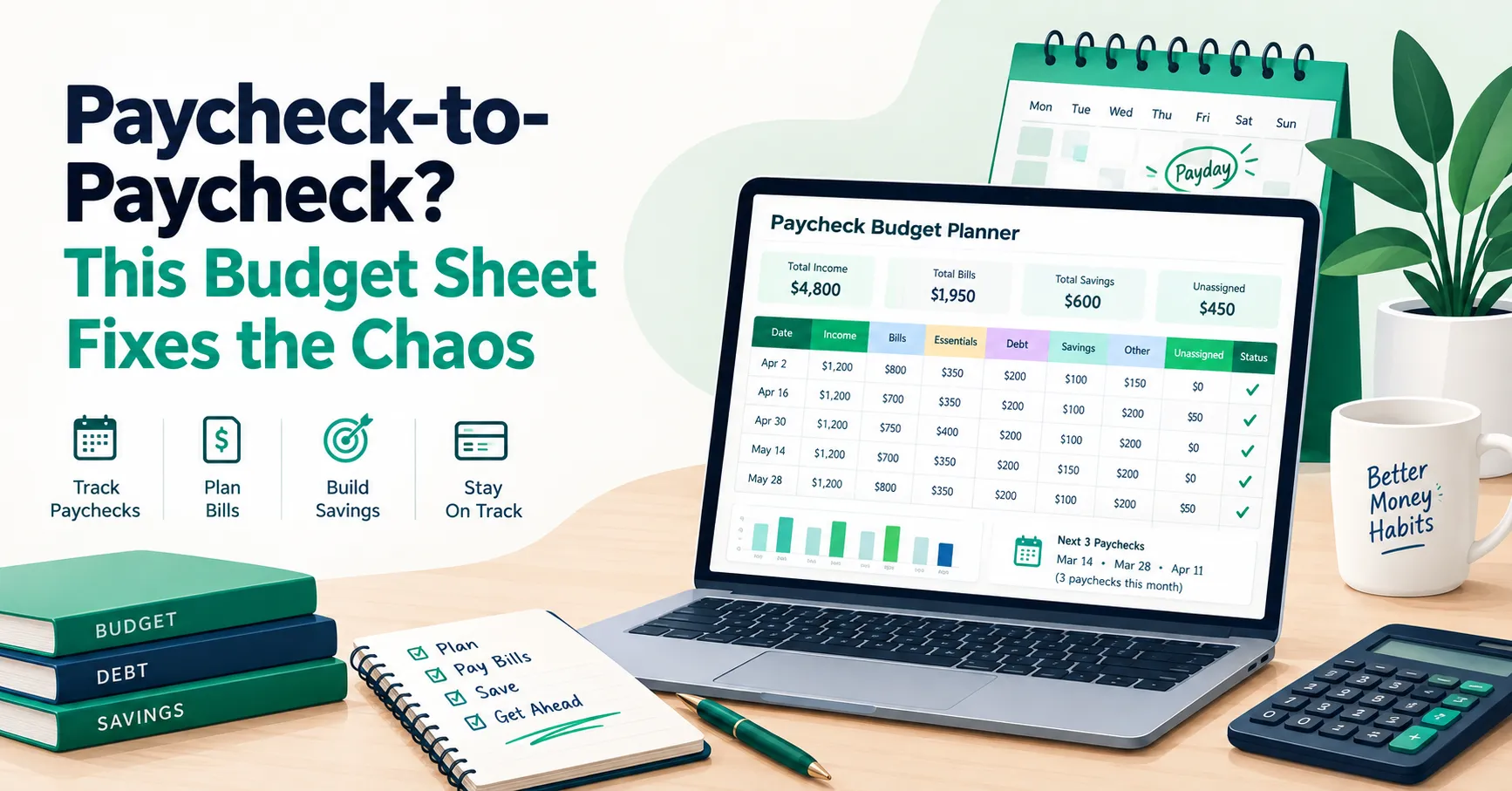
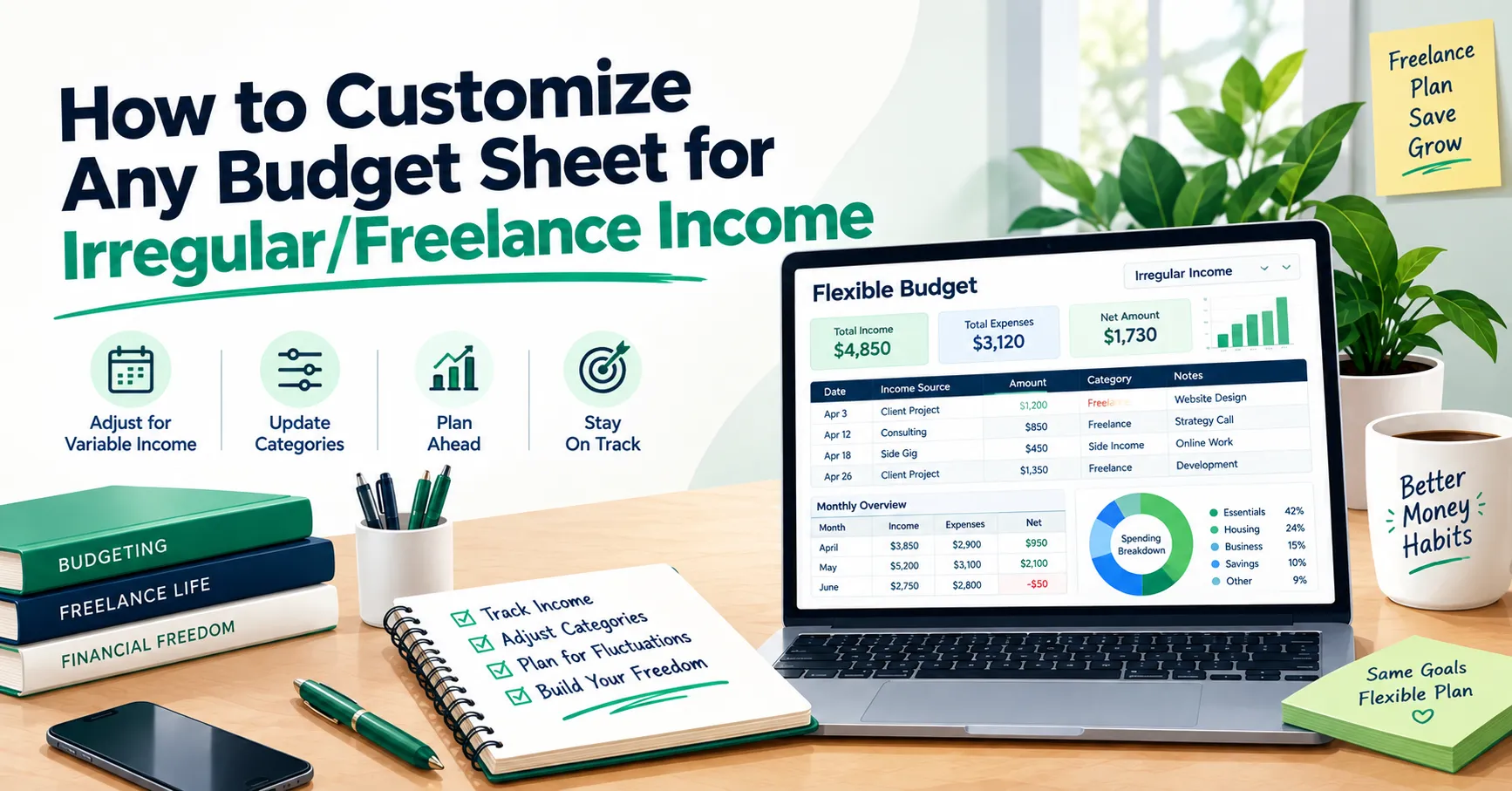
This is the exact adjustment that turns the Freelancer Budget Sheet — or honestly, any budget template you already like — from something built for a 9-to-5 paycheck into something that actually fits how you get paid.
How to Customize Your Budget Sheet for Irregular Income
- Pull your last 6 to 12 months of income, if you have it. Every invoice, every payment, all of it. If you’re newer to freelancing and don’t have that history yet, use your best honest guess and plan to revisit this in three months once you have real numbers.
- Find your baseline, not your average. Don’t use your average month, since that number gets pulled up by your best months and will let you down eventually. Instead, look at your worst three months from that period and average those. That’s your realistic floor, and it’s the number you actually want to build a budget around.
- Set that baseline as your “Income” in the budget sheet. Whatever your baseline number comes out to, that’s what goes in the Income field on the Freelancer Budget Sheet, or any other budget template. Not your best month. Not your average. Your floor.
- Build your fixed expenses around that floor first. Rent, insurance, minimum debt payments, the essentials — these need to fit comfortably inside your baseline number. If they don’t, that’s important information now, not a surprise you want to discover during an actual slow month.
- Add a “Business Buffer” or “Income Smoothing” line to your categories. Most personal budget templates don’t have this built in, so add it yourself as a category. In your good months, this is where the extra above your baseline goes — not into extra spending, into the buffer account that pays your baseline salary during the lean months.
- Track income by month, separately from what you spend. Keep a simple running log — even a rough one — next to your budget sheet that just shows what actually came in each month versus your baseline. Over time, this shows you the real shape of your income, which is exactly what you’ll use to recalculate your baseline down the road.
- Recalculate your baseline every few months, not every week. As your business grows or slows, your floor changes. Revisit it quarterly. Don’t chase it monthly, or you’ll never build the stability the whole system is designed to give you.
A Few Things Worth Knowing
Set aside for taxes the moment money lands, not when you file. This is the mistake that blindsides more freelancers than any budgeting error I’ve seen. Nobody’s withholding taxes for you, which means a big invoice looks bigger than it actually is. Pull 25-30% off the top into a separate account the day it arrives, before it even touches your spending plan. Treat it as already gone, because it is.
Your emergency fund needs to be bigger than the standard advice. The usual guidance is three to six months of expenses. For irregular income, aim closer to six to nine. Your income variability is the risk you’re insuring against here, not just job loss, and that risk is simply larger when your paycheck isn’t guaranteed.
Don’t let a great month convince you to raise your baseline too fast. One strong invoice doesn’t mean your floor moved. Wait for a real pattern — a few months of consistently higher income — before you adjust your baseline upward. Raising it too early is how the whole system quietly falls apart the next time a slow month shows up.
You Can Build Stability, Even Without a Steady Paycheck
Irregular income feels chaotic mostly because most budgeting tools assume it isn’t irregular at all. Once you separate what you earn from what you spend, that chaos settles down fast, even though the actual ups and downs in your income never go away.
Download the free Freelancer Budget Sheet, plug in your baseline instead of your average, and build your buffer from there. And if you want more tools like this landing in your inbox, join the SheetsWell email list — no hype, no noise, just what’s genuinely helped me and a lot of other people make peace with income that never looks the same twice.
Clear your debt. Master your cash. One baseline at a time.